Home Blog Page 4

Southeast Asian Literatures and the Anthropocene

0

Call for Papers: 4th ASLE-ASEAN Ecocritical Workshop-August 23-24, 2021

  • Organized by the Association for the Study of Literature and Environment –Association of Southeast Asian Nations (ASLE-ASEAN) and the Department of English, Faculty of Modern Languages & Communication, Universiti Putra Malaysia

Deadline: 25th June 2021
Contact: Dr Agnes Yeow and Dr Florence Toh
Email: asleaseanabstracts@gmail.com

In his seminal work “The Climate of History: Four Theses” (2009), the historian Dipesh Chakrabarty argues that the human condition has fundamentally changed and that our notions of what separates human and natural history are untenable given the realities of anthropogenic climate change. A decade later, this radical realisation continues to resonate with us as humanity finds itself grappling with a disruptive sense of time, space, and history. The Enlightenment, modernity, globalisation, decolonisation, the nation-state and a host of other historical, political, social, economic and cultural categories have all come under renewed intense scrutiny and interrogation in light of the climate crisis that we are living and experiencing on a daily basis. The core constructs of class, race and gender – so pivotal to the Humanities – are being reconsidered and reframed to reflect the conditions of the geological
epoch of our own making: the Anthropocene.


The Anthropocenic turn in the Humanities has seen a groundswell of wide-ranging theoretical, philosophical, cultural and ethical discourses and debates. As a critical concept, the Anthropocene has informed and shaped disciplines in both the Humanities and Sciences and created stimulating and innovative modes of inquiry. As a narrative, it can be argued that the Anthropocene has lain ‘dormant’ in the settings and dwellings of literary works and has only come to the fore through the strategic process of re-centring. More importantly, the social dimension of climate change and the Anthropocene necessitates a reassessment of literature to unearth the ways in which communities respond to or imagine climate change.


This conference poses questions such as “How do Southeast-Asian writers and cultural practitioners tell the story of climate change?” and “What creative strategies are deployed in narrating changes which occur over vast scales of time and space?” To what extent, if at all do Southeast-Asian writers engage with the Anthropocene and how is this shown in their writings? What is the difference between reading/narrating the Anthropocene in the Global South and the Global North in a world where inequalities abound especially with regards to carbon emissions and resource consumption?

We welcome submissions which focus on Southeast Asian writings and cultural expressions and how these engage – either explicitly or implicitly – with the Anthropocene both as a critical concept and as a lived reality. We are interested in papers that consider a plurality of themes, issues, methodologies, and areas of inquiry, including, but not limited to, the following:
● Climate fiction
● Foodscapes
● Landscapes
● Ecopoetics
● Sense of place and displacement: global, planetary, regional, national, communal, personal
● Environmentalisms
● Eco-philosophy and ethics
● Environmental justice
● Empire, imperialist ecology
● Postcolonial ecocriticism

● Environmental nostalgia
● Climate trauma
● Eco-cinema
● Speciesism
● The politics and identity of place in the Anthropocene
● Dystopia, utopia and speculative futures
● Indigenous ecologies
● Critical animal studies
● Critical plant studies
● Ecocritical geographies
● Science and technology
● The posthuman
● Material ecocriticism
● Trash, toxins, waste
● Soil
● Water
● Air
● The weather
● Bioregionalism
● The littoral
● Ecofeminism, gendered ecologies
● Eco-masculinity
● Disability and the environment
● Medical humanities
● The Capitalocene and the Plantationocene
● Environmental affect
● Eco-spirituality
● Ecocide
● Urban/rural dwellings
● Planetary consciousness
● Ecomedia
● Eco-psychology

Please submit abstracts (200-250 words) to asleaseanabstracts@gmail.com by 25th June, 2021. Papers for presentation must not exceed 20 minutes in length.

For enquiries relating to the 4th ASLE-ASEAN Ecocritical Workshop, please email us at asleaseankl@gmail.com

CFP: Centering Black Cultural Production in Translation

0

As recent debates around the translation of Amanda Gorman’s inauguration poem demonstrate, public discourse generally lacks a sophisticated means for discussing the circulation of Black-authored texts or the position of Black translators within the world literary system. Even within translation studies as a discipline, the topic of Black-authored and -translated texts has been marginalized. This situation must be understood within the context of global anti-Black racism and the systemic exclusion of Black creators and thinkers from publishing, film, media, and academia. Within this structural context, an attention to the translation of Black African and diasporic cultural production may have vital and far-ranging impact. As Kaiama L. Glover (2019) argues, “translation informs the discourses that determine which black lives matter and, relatedly, the success or failure of policies and practices that have an explicit impact on those lives” (30).

This special focus of Studies in Twentieth and Twenty-First Century Literature (STTCL) explores translation of Black African and diasporic literature, film, and media. It aims to build on the work of translation scholars of Black African and diasporic texts such as Paul Bandia, Kathryn Batchelor, and Evan Maina Mwangi and of Black translators such as John Keene, Marion Kraft, and Wangui wa Goro. Recent advances in the field have allowed greater prominence for translation scholars located in Africa, increasing conversation about Blackness in translation in Brazil, and research into the translation of hip hop lyrics and the subtitling and dubbing of US-American films that feature African American Vernacular English. While some scholarship has analyzed Blackness in translation through the writing of White writers such as Harriet Beecher Stowe, Mark Twain, and French women abolitionists, this special focus centers Black cultural production and the possibilities it holds for non-normative ways of thinking and practicing translation.

Articles may examine Black-authored and/or -translated texts written and translated after 1900, or post-1900 translations of older texts. As STTCL focuses on texts in French, German, and Spanish, articles may address translations between these languages or translations between these languages and another language/other languages. We are particularly interested in texts that explore translations from or into indigenous African languages or Black creoles, pidgins, or dialects.

The journal’s language of publication is English, so articles should be written in or translated into a variety of English (US, UK, Jamaican, Indian, Nigerian, etc.). Length should be between 6,000-8,000 words (including notes and references). Proposals that make use of the innovative and interactive potential of the journal’s online platform are encouraged. Interested authors should send a 300-500-word abstract to Dr. Priscilla Layne (playne@email.unc.edu) and Dr. Corine Tachtiris (ctachtiris@umass.edu) by June 15, 2021. Notification of abstract selection will be made by July 1, 2021. Full-length articles will be expected by November 30, 2021.

Announcement posted by Dr. Kathleen Antonioli, STTCL Editor.  For general inquiries about the journal, contact kantonioli@ksu.eduStudies in 20th & 21st Century Literature (STTCL) is committed to publishing high quality, anonymously peer reviewed articles written in English on post-1900 literature, film, and media in French, German, and Spanish. The journal is devoted to theory and criticism in the modern languages, and encourages interdisciplinary and collaborative submissions. A book review section appears in every issue.Contact Info: 

Dr. Priscilla Layne (playne@email.unc.edu)

Dr. Corine Tachtiris (ctachtiris@umass.edu)

Contact Email: ctachtiris@umass.edu

URL: https://newprairiepress.org/sttcl/

Postdoctoral Research Fellow (Department of Foreign Languages and Translation) at the University of Agder, Norway

0

A fixed-term 100 % position is available at the University of Agder, Faculty of Humanities and Education, as a Post-Doctoral Research Fellow affiliated to the Department of Foreign Languages and Translation, for a period of two years. The position is located at the University of Agder’s Kristiansand campus. The starting date is according to agreement. About the Faculty:
h ttps://www.uia.no/en/about-uia/faculties/faculty-of-hhumanities-and-education

The position is linked to the research project Default translation: entrenched patterns in translated language and how they emerge (De-Trans). This project investigates the properties of uninterrupted translation production in keystroke log data. The project is hosted at the University of Agder and involves an international research team.

Responsibilities

The successful candidate will be based at UiA in Kristiansand and work along with a project team.

The aim of the De-Trans project is to investigate translators’ online text production. The majority of research in the field of Cognitive Translation and Interpreting Studies has involved those areas of text production that represent slow, deliberative problem-solving. This project, in contrast, studies translation choices that are fast, first and frequent, associated with a so-called ‘default production mode’.

The post-doctoral research fellow will be involved in the collection and analysis of keystroke log data in multiple groups of translating subjects. Analysis will involve statistical modelling to identify the factors associated with so-called default segments. The successful candidate may be involved in developing variations on the basic research design, including task variation (from-scratch translation versus post-editing) and the possible inclusion of additional data streams (eye-tracking, cued retrospection). In addition to research responsibilities, the successful candidate may also be required to organize the occasional seminar or participate in MA supervision or assessment.

Required qualifications

  • A PhD degree in Translation Studies or in linguistics with a relevant translation-oriented dissertation.
  • Candidates must have obtained their doctorate or have submitted their doctoral thesis before the appointment decision is made and must have defended their thesis by the starting date.
  • Interest in empirical studies of the translation process.
  • Strong data analysis skills.
  • Extensive experience with research design and statistical analysis
  • Strong academic writing skills.
  • Excellent spoken and written English.
  • Strong language skills in either German, a Scandinavian language, Spanish, Italian or Polish.

Further provisions relating to the positions as Post-Doctoral Research Fellows can be found in the Regulations Concerning Terms and CConditions of Employment for the post of Post-Doctoral Research Fellow, Research Fellow, Research Assistant and Resident.

Desired qualifications

  • Organizational and teamwork skills, with a willingness to work on a larger research project in an international team of researchers.
  • Understanding of and ability to contribute to public engagement activities.
  • Strong organizational and time-management skills.
  • Excellent verbal communication skills.

Personal qualities

  • Good communication and teamwork skills, analytical mind, scientific curiosity and creativity, interest and motivation, accuracy, attention to detail, commitment and concentration, patience, ability to work and deliver under pressure.
  • Personal qualities and suitability for the position will be emphasized.

We offer

  • professional development in a large, exciting and socially influential organization a positive, inclusive and diverse working environment.
  • modern facilities and a comprehensive set of welfare offers membership of the Norwegian Public Service Pension Fund.

More about working at UiA

The position is remunerated according to the State Salary Scale, salary plan 17.510, code 1352, NOK 545 300 – 566 700 gross salary per year. Higher salary grades may be considered for particularly well-qualified applicants. A compulsory pension contribution to the Norwegian Public Service Pension Fund is deducted from the pay according to current statutory provisions.

General information

UiA is an open and inclusive university. We believe that diversity enriches the workplace and makes us better. We, therefore, encourage qualified candidates to apply for the position independent of gender, age, cultural background, disability or an incomplete CV.

Women are encouraged to apply for the position.

The successful applicant will have rights and obligations in accordance with the current regulations for the position, and organisational changes and changes in the duties and responsibilities of the position must be expected. The appointment is made by the University of Agder’s Appointments Committee for Teaching and Research Positions.

Short-listed applicants will be invited for an interview. With the applicant’s permission, UiA will also conduct a reference check before appointment. Read more about the employment process.

In accordance with the Freedom of Information Act § 25 (2), applicants may request that they are not identified in the open list of applicants. The University, however, reserves the right to publish the names of applicants. Applicants will be advised of the University’s intention to exercise this right.

Application

The application and any necessary information about education and experience (including diplomas and certificates) are to be sent electronically. Use the link “Apply for this job”.

The following documentation must be uploaded electronically:

  • An application letter in English that addresses the desired qualifications for the position as described above.
  • A curriculum vitae in English, including a complete list of publications.
  • Certificates with grades.
  • Up to 5 publications or academic articles (including the Doctoral thesis).
  • List of reference persons: 2-3 references to be contacted at the final stage of the application process.

The applicant is fully responsible for submitting complete digital documentation before the closing date. All documentation must be available in a Scandinavian language or in English.

Application deadline: 24 June 2021

Contact

For questions about the position:

For questions about the application process:

Lecturer in Audiovisual Translation (Teaching and Scholarship)

0
Location: Leeds – Main Campus
Faculty/Service: Faculty of Arts, Humanities & Cultures
School/Institute: School of Languages, Cultures and Societies
Category: Academic
Grade: Grade 8
Salary: £41,526 to £49,553 p.a.
Working Time: 100%
Post Type: Full Time
Contract Type: Ongoing
Release Date: Thursday 03 June 2021
Closing Date: Thursday 17 June 2021
Reference: AHCLC1140

Are you an expert in the theory and practice of audiovisual translation with proven abilities to carry out profession-oriented teaching for postgraduate students? Are you passionate about delivering an exceptional student experience in a research-intensive Russell Group University? Are you passionate about leading and delivering quality teaching for the renowned MA programme in Audiovisual Translation at the University of Leeds?

The School of Languages, Cultures and Societies, University of Leeds, invites applications for the above post starting on 1st September 2021. The appointment is based in the Centre for Translation Studies (CTS) in the School of Languages, Cultures and Societies. 

You will carry out teaching on our MA in Audiovisual Translation Studies, with a particular focus on its core modules Subtitling and Respeaking for Deaf and Hard of Hearing Audiences (MODL5080M) and Strategies and Tools in Audiovisual Translation (MODL5025M). You will be expected to convene, teach and assess on a number of other modules on this and other postgraduate programmes in CTS, e.g., Introduction to Screen Translation. You will also be expected to take on administrative duties in CTS, such as module convening, organisation of professionalisation talks and liaising with external professional tutors. You will also contribute to the overall programme management and other of the School’s activities, including the teaching of School-wide undergraduate modules, if there is workload space.

You will need to have a PhD degree in Translation Studies and an MA or PGDip from a professional Audiovisual Translation or Applied Translation Studies programme with Merit or above. You will also need to have professional experience in Audiovisual Translation.

If there are any further queries about the post, please contact: 

Professor Emma Cayley, Head of School, email: E.Cayley@leeds.ac.uk

Professor Binhua Wang, Director of Translation Studies, email: b.h.w.wang@leeds.ac.uk

Lecturer in Translation Studies, with Mandarin Chinese (Teaching and Scholarship)

0

Job reference: HUM-016808

Location: University of Manchester, Oxford Road, Manchester

Closing date :15/06/2021

Salary: £36,914 to £51,034 per annum, depending on relevant experience

Employment type: Permanent

Faculty/Organisation: Humanities

School/ Directorate: Modern Languages and Cultures

Hours per week: Full Time

Contract Duration: From 1 September 2021

Applications are invited for the teaching and scholarship (teaching-focused) post of Lecturer in Translation Studies, which is tenable from 1 September 2021 and offered on an open-ended basis. You must be fully proficient in English and Mandarin Chinese and be able to deliver courses in Mandarin <> English translation and in Mandarin <> English dialogue interpreting for business and public services.

You must have a PhD (awarded) or equivalent in a relevant field and demonstrable teaching experience in Translation Studies at university level, including on MA programmes, as well as in curriculum/programme development. Experience with virtual learning environments and in developing online teaching materials is essential. Expertise in intercultural communication would be an advantage. As this is a teaching-focused post, contributions to refereed publications on scholarship of education, teaching and learning, or curriculum design would be desirable. You must have excellent interpersonal skills and be able to empathise with students.

As an equal opportunities employer we welcome applicants from all sections of the community regardless of age, sex, gender (or gender identity), ethnicity, disability, sexual orientation and transgender status.  All appointments are made on merit.

Blended working arrangements may be considered.

Please note that we are unable to respond to enquiries, accept CVs or applications from Recruitment Agencies.

Enquiries about the vacancy, shortlisting and interviews:
Name: Professor Karl Posso through his senior administrative assistant, Stephanie Holmes
Email: stephanie.holmes@manchester.ac.uk

General enquiries:
Email: hrservices@manchester.ac.uk

Technical support:
Email: https://jobseekersupport.jobtrain.co.uk/support/home

This vacancy will close for applications at midnight on the closing date.

Please see the link below for the Further Particulars document which contains the person specification criteria.

https://www.jobs.manchester.ac.uk//PreviewDocument.aspx?docid=52211&GUID=e70028bc-9b89-45ac-b02d-8003ff5d3d56&jobid=20205

Call for Papers: Transgressive Translations

0
Deadline:
Saturday, 31 July, 2021

We are pleased to invite submissions for the 16th issue of Kohl: a Journal for Body and Gender Research, slated for publication in December 2021. Young activists, independent researchers, graduate students and fresh graduates are particularly encouraged to apply. We also welcome submissions from seminal contributors in the field.

With the urgency of transnational organizing, we would like to explore the pedagogies of translating (beyond) borders. We are often trapped in cycles of violence that limit our political action to “responding” to dominant orders and realities. Our radical potential is therefore bound to an existence that can only be articulated in relation to the systems of power we seek to dismantle. These impasses are multiple: our knowledges are provincialized; our contexts are treated as data; our bodies are ruled by necropolitics, border controls, and biological determinism; our languages are delegitimized. How do we leave the languages, contexts, and fields that we are assigned? How do we build an elsewhere?

We would like to be able to reach out and across to each other without the mediation of the sites of power that make our respective contexts unlivable, and/or that operate at a global level. This work of transnational weaving is what we call a work of translation. Translation is not merely a process of conveying terminologies or meaning, but is a language in and of itself, as it travels across contexts and imaginaries. It is the political act of organizing differently, as radical movements, against cultural and political untranslatability and normativity. This issue aims to engage with queer and decolonial feminist interventions in (interpolitical and linguistic) translation and writing paths, so we can destabilize existing borders and limitations, and trespass into other circulations.

For this issue of Kohl, we welcome articles, texts, debates, translations, collaborative work, personal pieces, literature, and art pieces that go beyond linguistic and institutionalized understandings of translation. We are also looking for work that envision ways of being together and of transnational world-making through intercultural translation. We particularly encourage those who position themselves at the margins of systems of oppression (women, trans, intersex, gender non-conforming individuals, migrants, refugees, people with disabilities, workers) to submit.


Possible topics include but are not limited to:

  • Trespassing: documenting and imagining other circulations for transnational organizing
  • Utopia and elsewhere: new languages and structures of speech/writing
  • Untranslatable bodies: how do we understand and communicate sex, body, and desire away from the conventional projected hegemonic language(s) and discourse(s) of global and local systems of power?
  • Making sense out of disposability, “killable” bodies, and unauthorized movement
  • Translating police and prison abolition transnationally
  • Queer theory as it is explored or experienced in native tongues, languages, and dialects of the Global South
  • Dissonance in transnational organizing: what happens when we cannot transpose one context to another? How do we talk with and to each other?
  • Beyond nation-state borders: building theory/praxis across resistance movements in the South
  • Translation as world-making: processes of creating new languages that disrupt and transgress
  • Producing knowledge and theories in the language(s)/context/discourses ​​of the Global South: what knowledge(s) do we need? What languages? How do we understand political struggles and how do we write/convey them?
  • Locating the reader in the processes of writing/translation/knowledge production: how can the reader inform, feed, collaborate, and engage with translation?
  • Critiques of the theories of translation
  • Translators as workers: how do systems of legitimacy (institutional and geopolitical) operate when it comes to translation and translators?


The deadline for submission is Saturday, July 31, 2021.


To submit a paper, please send your blinded piece to submit@kohljournal.press(link sends e-mail) as a .doc or .docx file, with “Submission Issue 16” as the subject of your e-mail.


We accept work in progress, provided full drafts are submitted. If accepted for inclusion, please note that your paper will be translated to a second language by our team.

Special Issue “Machine Translation for Conquering Language Barriers”

0

The MDPI journal Information invites submissions to a Special Issue on “Machine Translation for Conquering Language Barriers”.

Machine translation is increasingly becoming a hot research topic due to its potential of becoming one of the most significant disruptive technologies today. It battles various aspects of existing language barriers in challenging ways, thus striving to enable effective communication and transferring of meaning across different languages by applying different approaches, technologies, and solutions. The idea behind machine translation is to automate the process of translation within the contemporary translation workflow in order to respond to the overwhelming quantity of data sets that need to be translated in the best possible way, with special emphasis on speed and quality. However, since machine translation systems depend on large data sets and computer power, numerous issues remain open, especially when it comes to less spoken and under-resourced languages.

In this Special Issue, original and unpublished works with results in any way related to machine translation and linked areas are welcome, especially those that include experimental and methodological aspects on novel solutions, system implementation approaches, new data sets and resources, natural language processing techniques and tools, hybrid solutions, technology combination and integration, computer-assisted translation and impact on quality and productivity, various types of user studies, incorporation of linguistic knowledge and other digital resources, translation quality evaluation and estimation, post-editing efforts and strategies, ethical and legal issues, but also other concerns that deal with tackling existing language barriers and problems within the field of machine translation. Nevertheless, submissions with a strong theoretical contribution are also desirable.

Topics of interest include but are not limited to:

  • Machine translation systems and deployment;
  • Analysis of machine translation models and approaches;
  • Evaluation of machine translation quality;
  • Machine translation quality estimation;
  • Corpora and other resources for machine translation;
  • Natural language processing for machine translation;
  • Language technologies for machine translation;
  • Linguistic knowledge in machine translation;
  • Machine translation application in various fields.

Dr. Ivan Dunđer
Guest Editor


Manuscript Submission Information


Manuscripts should be submitted online at www.mdpi.com by registering and logging in to this website. Once you are registered, click here to go to the submission form. Manuscripts can be submitted until the deadline. All papers will be peer-reviewed. Accepted papers will be published continuously in the journal (as soon as accepted) and will be listed together on the special issue website. Research articles, review articles as well as short communications are invited. For planned papers, a title and short abstract (about 100 words) can be sent to the Editorial Office for announcement on this website.

Submitted manuscripts should not have been published previously, nor be under consideration for publication elsewhere (except conference proceedings papers). All manuscripts are thoroughly refereed through a single-blind peer-review process. A guide for authors and other relevant information for submission of manuscripts is available on the Instructions for Authors page. Information is an international peer-reviewed open access monthly journal published by MDPI.

Please visit the Instructions for Authors page before submitting a manuscript. The Article Processing Charge (APC) for publication in this open access journal is 1400 CHF (Swiss Francs). Submitted papers should be well formatted and use good English. Authors may use MDPI’s English editing service prior to publication or during author revisions.


Keywords

  • Machine translation systems and deployment
  • Analysis of machine translation models and approaches
  • Evaluation of machine translation quality
  • Machine translation quality estimation
  • Corpora and other resources for machine translation
  • Language technologies for machine translation

Call for Proposals —Role Reversal: Audiovisual Translation into English

0

Guest editors
Jorge Díaz-Cintas (University College London)
Lydia Hayes (University College London & University of Bristol)

In the privileged position of de facto lingua franca worldwide, English has been either the source or pivot language of innumerable translations over the past century, especially insofar as audiovisual texts are concerned. With the arrival of the talkies, the film industry began to be dominated by Hollywood, giving rise to postproduction industries around the globe dedicated to the localisation of imported English-language content. Whereas in countries where English is not a native language these English-language originals were and continue to be mainstreamed on TV channels and in cinema theatres, in the Anglosphere, non-English-language, or ‘foreign’, content was traditionally reserved for art-house cinemas until recent times. The surge of subscription video-on-demand (SVoDs) platforms—such as Netflix, Amazon Prime Video and HBO—has witnessed a balancing act whereby ‘foreign’ content is now mainstreamed alongside English-language originals. This shift in the distribution paradigm has generated more need for the localisation into English of audiovisual content, which has brought about a growth in the English-subtitling industry as well as the emergence of a burgeoning English-dubbing industry in the US, UK, mainland Europe, and India (Hayes, 2021).

English dubs have received significant media attention in recent years (Bylykbashi, 2019; Newbould, 2019), with Netflix acknowledged as trailblazing in the effort, though this mode in English localisation is not a novelty proper. Indeed, dubbing has long been the AVT mode by convention for localising cartoons and some ads (Chaume, 2012) as well as video games into English. Furthermore, before foreign-language live action was ‘sidestreamed’ to art-house cinemas and the English-subtitling industry consolidated, the early decades of sound film often opted for dubbed versions when importing Westerns (Sanderson, 2020), Kung Fu (Magnan-Park, 2018) and European films (O’Brien, 2019; Mereu Keating, 2021) into the Anglosphere.

Alternative forms of dubbing, such as in video-game localisation, and of subtitling, such as surtitles, have been normatively practised and yet lack in industry or academic research. Furthermore, beyond the two dominant modes of AVT—subtitling and dubbing—voiceover has often been used for translating non-fiction into English, such as for foreign news reports, documentaries, as well as in the arguably pseudo-non-fiction genre of reality TV.

Bearing in mind these traditions and the developments in the English-language localisation industry hitherto outlined, we invite authors to invert the Anglocentric lens through which English is the source language, and offer insight into AVT theory and practices for English as target language.

Suggested topics

Areas of interest include but are not limited to the following:

  • Subtitling into English
  • English subtitles for the d/Deaf and hard-of-hearing (SDH)
  • Subtitling into English via respeaking
  • Dubbing into English
  • Voiceover into English
  • Audio description (AD) in English
  • Video game localisation into English
  • Fansubbing and fandubbing into English
  • English as a pivot language in audiovisual translation
  • Theatre or opera: surtitling, AD, SDH
  • Reception or perception studies involving Anglophone participants
  • Ideological manipulation in audiovisual translation
  • Exophonic translation into English

References

Bylykbashi, K. (2019). “The big business of dubbing”. TBI Vision, 4 April. https://tbivision.com/2019/04/04/the-big-business-of-dubbing

Chaume, F. (2012). Audiovisual Translation: Dubbing. Manchester: St Jerome. Hayes, L. 2021. “Netflix disrupting dubbing: English dubs and British accents”. Journal  of  Audiovisual Translation, 4(1): 1-26. https://doi.org/10.47476/jat.v4i1.2021.148

Hayes, L. (2021). “Netflix disrupting dubbing: English dubs and British accents”. Journal of  Audiovisual Translation, 4(1): 1-26. https://doi.org/10.47476/jat.v4i1.2021.148

Magnan-Park, A. H. J. (2018). “Dubbese fu: The kung fu wave and the aesthetics of imperfect lip synchronization”. Journal of Chinese Cinemas, 12(3): 219-236. https://doi.org/10.1080/17508061.2018.1522803

Mereu Keating, C. (2021). “‘The usual hubbub of accents’: Italian films, transnational distribution  and the reception of English-language dubbing in Britain (1950s-60s)”. Textus. English Studies in Italy, 34(1): 255-276. https://doi.org/10.7370/100404

Newbould, C. (2019). “Dubbed content is on the rise thanks to streaming services such as Netflix: “localisation” is bringing international streaming content to a global audience”. The National, 20 August. www.thenationalnews.com/arts-culture/television/dubbed-content-is-on-the-rise-thanks-to-streaming-services-such-as-netflix-1.900639

O’Brien, C. (2019). “Dubbing in the early 1930s: An improbable policy”. In C. O’Sullivan and J-F. Cornu (eds) The Translation of Films 1900–1950. Oxford: Oxford University Press.

Sanderson, J. (2020). “El sociolecto del western en España”. Paper given at the 9th Dubbing and Subtitling Conference: The Audiovisual Sociolect. Alicante: Universidad de Alicante. 

Specifications

Proposals should:

  • Not exceed 400 words including keywords and references.
  • Include the title, author(s) names, institution and email.
  • Be written in Spanish or English.
  • Fit within one of the categories of articles published by the journal: empirical and case studies, methodological and theoretical articles and literature reviews.
  • If a research study (empirical or case study), make sure to include: a statement of the problem, research questions, a description of the setting (city and country, type of institution, level of instruction), the participants, the method (type of study, data collected, analysis), details about the intervention, if any, (type of intervention, purpose, length, etc.), and main findings and implications.
  • Include five key words.
  • Include references.
  • Be accurate, coherent and concise, and reflect the paper’s content.
  • Detail the main argument and findings of the paper in clear and unambiguous terms and explain why a person should read it.

Submission

Please send all proposals to the journal’s email revistaikala@udea.edu.co, with the heading: Role Reversal: Audiovisual Translation into English.

The proposals will be initially assessed, based on their innovation, applicability, clarity, correctness, originality, and their appropriateness and alignment with the topic of the special issue. Authors of proposals that meet the criteria will be invited to submit full manuscripts of between 8,000 and 8,500 words, including abstract ​​and references, through the journal platform. These will then go through a peer review process. Only manuscripts that successfully undergo the review process will be published. Quality of the submission as well as reviewers’ comments are decisive factors on acceptance for publication.

Important dates for this special issue:

Papers accepted for publication must comply with all journal publication guidelines, which can be consulted at: https://revistas.udea.edu.co/index.php/ikala/about/submissions#authorGuidelines

15 July 2021 Deadline for submission of abstracts
2 August 2021 Contributors notified of acceptance of abstracts
28 February 2022 Submission of paper
March – June 2022 Peer-review of paper
July – October 2022 Authors’ corrections and second peer review, if applicable
Nov. 2022 – April 2023 Copyediting and layout
May 2023 Publication

Call for Papers – Special Collection: Translation, Remediation, Spread: The Global Circulation of Comics in Digital Distribution

0
deadline for submissions:
June 30, 2021
full name / name of organization:
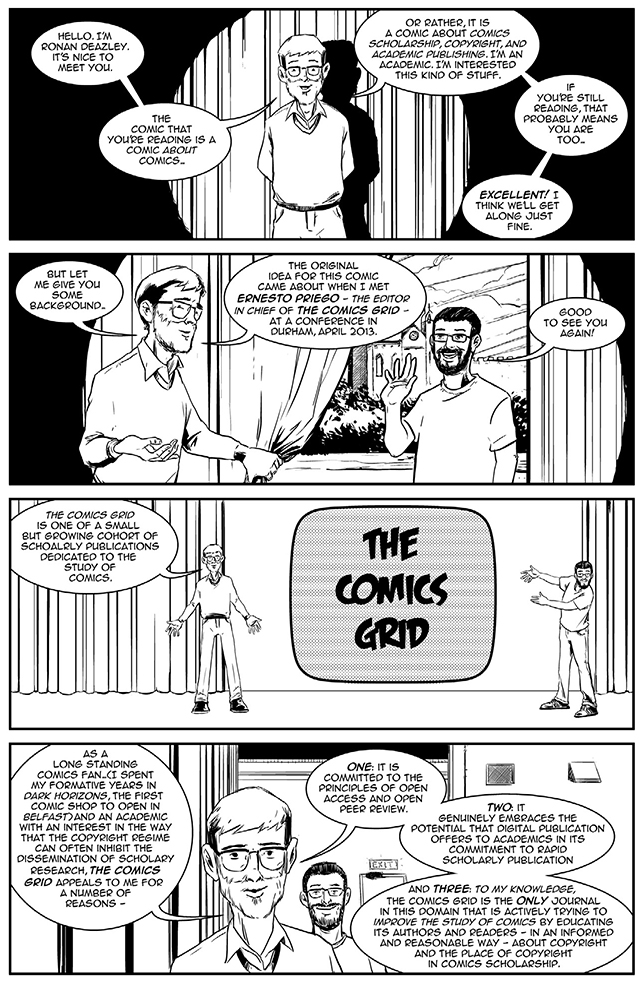
The Comics Grid: Journal of Comics Scholarship
contact email:

The Comics Grid: Journal of Comics Scholarship

Call for Papers

Special Collection: Translation, Remediation, Spread: The Global Circulation of Comics in Digital Distribution

Editors: Jonathan Evans, Kathleen Dunley and Ernesto Priego

This full Call for Papers is available to download from the Journal’s home page (https://www.comicsgrid.com/)

Timeline: 

  • CFP made public: May 2020
  • Deadline for first drafts: 30 June 2021
  • Initial editorial desk review: 30 August 2021
  • Peer Reviews due: 16 January 2022
  • Revised papers due: 30 June 2022
  • Estimated Publication of articles as they become ready: August 2022


Submissions are called for the journal’s Research section (3000-7000 words). For full submissions information,  please visit https://www.comicsgrid.com/about/submissions/.  Please note we do not consider submissions on the basis of abstracts only; we only receive and consider full versions of submissions via our journal management system .

This Special Collection of The Comics Grid: Journal of Comics Scholarship will focus on the global circulation of comics in digital forms, from webcomics to subscription services from traditional comics publishers. The Collection’s emphasis will be on the international, multi-lingual, multi-format, diverse nature of “comics”.

Comics have circulated in their original language and in translation since the inception of print: as a physical object, comics (including strips in newspapers) can travel across international borders with their readers, or they can be translated for publication in new locales. Recent technologies have made digital distribution possible, theoretically allowing for global access to comics published online anywhere in the world as well as the possibility of distributing translated versions within a proprietary system.

Translation is central to the global circulation of comics and comics as an art form are often experienced in translation (Evans 2017).  While there is a growing body of work on the translation and circulation of comics (Zanettin 2008, Altenberg and Owen 2015, Mälzer 2015, Reyns-Chikuma and Tarif 2016; see overview in Zanettin 2020), little has yet addressed the new world of digital distribution and how this is affecting translation practices. Work on the digital distribution of comics (e.g. Priego 2010, Steirer 2014, Crucifix et al. 2017-19, Augureau et al. 2018) has tended not to address this at a global scale or to investigate how comics are distributed across languages.

Translation can be both official and unofficial: scanlation — the fan translation (Evans 2020) of comics — is a vibrant practice that has found a home online, but it is unclear how the shift towards digital publishing by legacy publishers such as Marvel and DC has changed the environment for the practice. Nor is it clear how extensively platforms such as Comixology  have embraced translation and international distribution, as the French language site includes large quantities of untranslated, English language materials. Web comics as born digital objects may easily be distributed online, but there is less understanding of how they cross linguistic and cultural borders.

For this Special Collection, we are open for submissions that explore the intersections between the translation and distribution of comics, the latter understood in its most diverse, international sense, with a particular focus that goes beyond dominant themes that are over-represented in current scholarship. The Special Collection seeks original research articles that investigate the ways in which digital distribution has opened up, or closed down, access to comics produced globally. Are the old centres of the USA, France and Japan still central to comics production? Or has comics production been democratised and decentralised? How have different comics cultures adapted to and capitalised on digital distribution, and how are they reaching readers in other cultures (through translation)?

We are especially interested in the reception and translation of comics outside of the Anglosphere, which are typically overlooked, but also welcome work on American comics. We encourage research on the underrepresented areas of non-English language comics, LGBT+ comics, women’s comics and comics by people of colour. Contributions may use any relevant methodology to address the topic, but should follow the journal’s guidelines for submissions.

We call for submissions that are professionally written and presented, incorporating high-quality images that authors discuss directly and in detail. We will consider submissions from affiliated senior or early career scholars, practitioners and independent researchers, as long as they fit the journal’s call for papers, scope and editorial guidelines.

We invite energetic writing that is theoretically and interpretively bold. While academic rigour, the inclusion and close discussion of images and citational correctness are important to us as a precondition, a key feature our editors and reviewers will consider is the argument, the discovery, the evidence-based eureka moments conveyed in economical, precise, and, ideally, subtle prose. We believe academic writing about comics should be as striking and immediate as the medium itself.

Authorship

Submitted manuscripts should not have been published previously (except as unreviewed pre-prints in open access repositories) nor be under consideration for publication elsewhere.

All contributors should be listed, whether from those listed as authors or individuals named in acknowledgements; corresponding authors should ensure listed co-authors have provided their consent prior to submission.

We recommend using CRediT (Contributor Roles Taxonomy) to  describe each contributor’s specific contribution to the submission: https://www.casrai.org/credit.html. Please refer to our journal Authorship Guidelines at https://www.comicsgrid.com/about/authorship/ .

Submissions Information

Submissions to this Special Collection must engage with and directly cite, and if appropriate, link to relevant scholarship, and follow our submission guidelines for the Research section (3000-7000 words).

The Comics Grid: Journal of Comics Scholarship seeks to encourage robust open science methods and advocates the value of reproducibility. Authors submitting research articles presenting conclusions from quantitative and/or qualitative analysis, and/or presenting, discussing or referring to datasets or code in their submissions are strongly encouraged to cite and share such code or data in their submissions using  appropriate open-access repositories such as CORE,  figshare or Zenodo. Where data from human participants is presented and discussed, evidence of Ethics Review approval should be provided, and research ethics guidelines followed and discussed. Where the nature of the data impedes its open dissemination in spite of anonymisation, this should be clearly discussed in the submission. Submissions whose methods rely on datasets or present results from data analysis without citing the datasets used are likely to be declined unless a reasonable justification is discussed in the submission itself.

For full submissions information,  please go to https://www.comicsgrid.com/about/submissions/.  Please note we do not consider submissions on the basis of abstracts only; we only receive and consider full versions of submissions via our journal management system . If you have any queries relating to the Special Collection, please contact jonathan.evans@port.ac.uk for more information.

Licensing and Archiving

 The Comics Grid: Journal of Comics Scholarship provides immediate open access to its content on the principle that making research freely available to the public supports a greater global exchange of knowledge.

Authors of articles published in The Comics Grid: Journal of Comics Scholarship remain the copyright holders and grant third parties the right to use, reproduce, and share the original contents of the article according to the Creative Commons-Attribution license agreement.

The Comics Grid is published by the Open Library of Humanities. Unlike many open-access publishers, the Open Library of Humanities does not charge any author fees. This does not mean that we do not have costs. Instead, our costs are paid by an international library consortium.

The journal is indexed by the following services: SCOPUS, Nordic list, Web of Science, Google Scholar, Chronos, ExLibris, EBSCO Knowledge Base, CNKI, CrossRef, JISC KB+, SHERPA RoMEO, Directory of Open Access Journals (DOAJ), EBSCOHost, OpenAire, ScienceOpen, and Academia. In addition, all journals are available for harvesting via OAI-PMH. To ensure permanency of all publications, The Comics Grid also utilises CLOCKSS, and LOCKSS archiving systems to create permanent archives for the purposes of preservation and restoration.

For full submissions information,  please go to https://www.comicsgrid.com/about/submissions/.

References

Altenberg, T and Owen, RJ (eds) 2015 Comics and Translation. Special issue of New Readings,15. http://ojs.cf.ac.uk/index.php/newreadings/issue/view/18/showToc

Augereau, O, Iwata, M, and Kise, K 2018 A survey of comics research in computer science. Journal of Imaging,  4(7): 87. DOI:https://doi.org/10.3390/jimaging4070087

Crucifix, B, Dozo, B-O, Rommens, A, and Priego, E (eds) 2017-19 Poetics of Digital Comics. Special Collection in The Comics Grid: Journal of Comics Scholarship.  https://www.comicsgrid.com/collections/special/poetics-of-digital-comics/

Evans, J 2017 Comics and translation. In Bramlett, F et al. (eds) The Routledge Companion to Comics. London: Routledge. pp. 319-327.

Evans, J 2020 Fan translation. In Baker, M and Saldanha, G (eds) The Routledge Encyclopedia of Translation Studies 3rd edition. London: Routledge. pp. 177-181.

Mälzer, N (ed.) 2015 Comics – Übersetzungen und Adaptationen. Berin: Frank & Timme.

Priego, E 2010 The Comic Book in the Age of Digital Reproduction. Unpublished thesis (PhD), University College London.

Reyns-Chikuma, C and Tarif, J (eds) 2016 Translation and Comics. Special issue of TranscUlturAl,8(2). https://journals.library.ualberta.ca/tc/index.php/TC/issue/view/1878

 Steirer, G2014 No more bags and boards: collecting culture and the digital comics marketplace. Journal of Graphic Novels and Comics, 5(4): 455-469. DOI:http://dx.doi.org/10.1080/21504857.2014.913646

Zanettin, F (ed.) 2008 Comics in Translation. Manchester: St Jerome.

Zanettin, F 2020 Comics, manga and graphic novels. In Baker, M and Saldanha, G The Routledge Encyclopedia of Translation Studies 3rd edition. London: Routledge. pp. 75-79.

This full Call for Papers is available to download from the Journal’s home page (https://www.comicsgrid.com/)

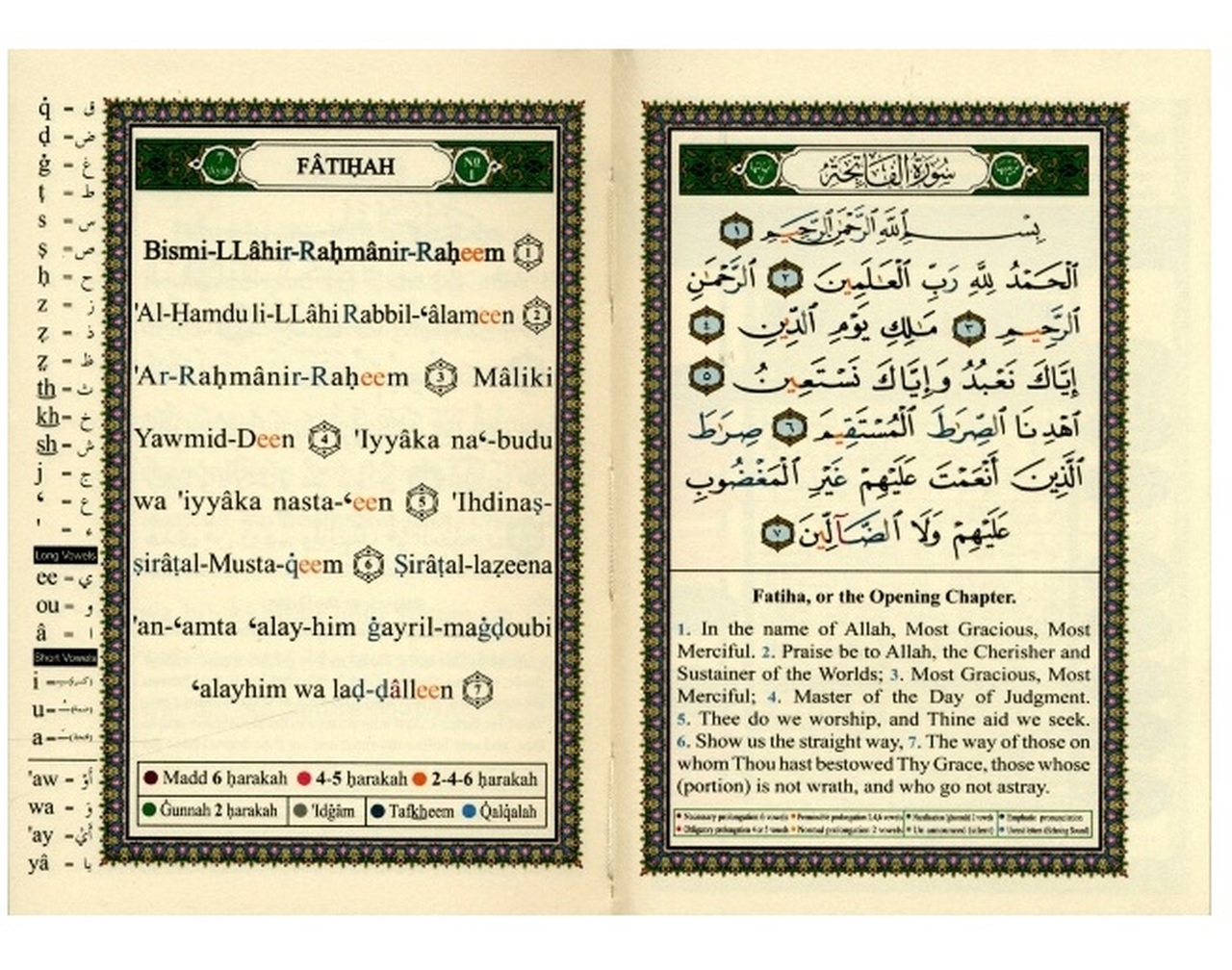
Quran in Translation: The global Quran book series

0
Quran Translation
The Global Qur’an is a new book series by Open Books Publishers that looks at Muslim engagement with the Qur’an in a global perspective.
They publish studies that focus on the translation and interpretation of the Qur’an or on the social, cultural, pedagogical, aesthetic, and devotional place of the Qur’an in Muslim societies worldwide. They particularly encourage comparative studies, investigations of transregional dynamics, and interactions between local and global contexts. Contributions from scholars outside Western Europe and North America are especially welcome.
Scholars interested in publishing work in this series and submitting their monographs and/or edited collections should contact the General Editor, Johanna Pink. If you wish to submit a contribution, please read and download the submission guidelines here.
Editorial Board:
Johanna Pink (General Editor)
Alessandro Cancian (Associate Editor)
Susan Gunasti (Associate Editor)
Lauren Osborne (Associate Editor)
Yusuf Rahman (Associate Editor)
SherAli K. Tareen (Associate Editor)
Mykhaylo Yakubovych (Associate Editor)