Home Blog Page 3

Assistant Professor – Translation Studies and Translation Theory

0

Applications invited for the post of Assistant Professor in Translation Studies and Translation Theory at the Department of French and Italian and the Program in Comparative Literature and Translation Studies, UC Santa Barbara.

Position overview

Percent time: 100% Anticipated start: 07/01/2022

Application Window

Open date: October 12th, 2021

Last review date: Monday, Nov 15, 2021 at 11:59pm (Pacific Time)
Applications received after this date will be reviewed by the search committee if the position has not yet been filled.

Final date: Tuesday, May 31, 2022 at 11:59pm (Pacific Time)
Applications will continue to be accepted until this date, but those received after the review date will only be considered if the position has not yet been filled.

Position description

The Department of French and Italian and the Program in Comparative Literature and Translation Studies at UCSB invites applications for a full-time tenure-track Assistant Professor in Translation Studies and Translation Theory, to begin July 1, 2022. The ideal candidate will be a scholar of French and Francophone and/or Italian cultures with extensive training in the theory of translation.

We seek candidates who have an active program of (or show strong potential for) research and publication in translation studies in any period. We are particularly interested in research that engages translation from a variety of critical perspectives. Applicants with broad interdisciplinary interests in fields including, but not limited to, world literature, postcolonial theory, environmental humanities, migration studies, legal, diplomatic and commercial exchanges, and intermediality are encouraged to apply. Additional linguistic proficiency, particularly (although not exclusively) as relevant to various (post)colonial and/or non-Western contexts, is a definite plus.

The successful appointee will teach in English, French, and/or Italian at the undergraduate and graduate levels. The appointee will be responsible for teaching core courses in translation theory as well as specialized courses on translation in French and/or Italian and Comparative Literature. The person hired for this position will also play a key role in mentoring students who are part of the Program for the Graduate Emphasis in Translation Studies and the Undergraduate Minor in Translation Studies.

We seek a colleague who will perform service for the Department of French and Italian and the Program in Comparative Literature and Translation Studies, participating in shared governance at the department and campus level, as well as someone who will collaborate in meaningful ways with various humanities and social sciences departments across campus. Broadly conceived, the position will strengthen our relations with the Departments of Global Studies, Communication, Film and Media Studies, Philosophy, History, Religious Studies, Linguistics, and others in Humanities and the Social Sciences.

The Department of French and Italian and the Comparative Literature Program are dedicated to the advancement of diversity, equity, and inclusion. We seek candidates who demonstrate strong evidence of commitment to advancing these core values of our department, program, and campus. Our program is especially interested in candidates who can contribute to the diversity and excellence of the academic community through their research, teaching, and service.

Qualifications

Basic qualifications(required at time of application)

At a minimum, applicants are expected to have completed all requirements for a Ph.D. (or equivalent) except the dissertation (or equivalent), at the time of application, in one of the following areas: Translation Studies, French and Francophone Studies, Italian Studies, Comparative Literature, or other cognate fields provided they can demonstrate a research focus in Translation Studies and Translation Theory.Additional qualifications(required at time of start)

Completion of the Ph.D. (or equivalent international degree) by the start date of the position. Preferred qualifications

We seek candidates who have an active program of (or show strong potential for) research and publication in translation studies in any period. We are particularly interested in research that engages translation from a variety of critical perspectives. Applicants with broad interdisciplinary interests in fields including, but not limited to, world literature, postcolonial theory, environmental humanities, migration studies, legal, diplomatic and commercial exchanges, and intermediality. Additional linguistic proficiency, particularly (although not exclusively) as relevant to various (post)colonial and/or non-Western contexts, is a definite plus.
Capacity to teach core courses in translation theory as well as courses in the French and Francophone and/or Italian programs with a strong translational component as demonstrated by their statement of teaching. Native or near-native competence in English and French or Italian.

Application Requirements

Document requirements

  • Cover Letter
  • Statement of Research
  • Statement of Teaching
  • Curriculum Vitae – Your most recently updated C.V.
  • Writing sample in English – The length limit on the writing sample should be up to 25 pages.
  • Statement of Contributions to Diversity – The applicants’ Statement of Contributions to Diversity will be reviewed for evidence of teaching, research, professional and/or public service contributions that promote diversity and equal opportunity, such as effective strategies used for the educational advancement of students in various under-represented groups; demonstrated contributions to the advancement of equitable access and diversity in education; and contributions furthering diversity and equal opportunity in higher education through participation in such activities as recruitment, retention, and mentoring of scholars and students.
  • Writing sample in French or Italian – The length limit on the writing sample should be up to 25 pages.
    (Optional)

Reference requirements

  • 3-5 letters of reference required

Applicants should provide the names and contact information for 3-5 references and must request letters of reference within the system in order to complete the application requirement.Apply link:https://recruit.ap.ucsb.edu/JPF02064

Help contact: frit19@frit.ucsb.edu

Campus Information

The University of California is an Equal Opportunity/Affirmative Action Employer. All qualified applicants will receive consideration for employment without regard to race, color, religion, sex, sexual orientation, gender identity, national origin, disability status, protected veteran status, or any other characteristic protected by law.

As a condition of employment, you will be required to comply with the University of California SARS-CoV-2 (COVID-19) Vaccination Program Policy https://policy.ucop.edu/doc/5000695/SARS-CoV-2_Covid-19. All Covered Individuals under the policy must provide proof of Full Vaccination or, if applicable, submit a request for Exception (based on Medical Exemption, Disability, and/or Religious Objection) or Deferral (based on pregnancy) no later than the applicable deadline. New University of California employees must (a) provide proof of receiving at least one dose of a COVID-19 Vaccine no later than 14 calendar days after their first date of employment and provide proof of Full Vaccination no later than eight weeks after their first date of employment; or (b) if applicable, submit a request for Exception or Deferral no later than 14 calendar days after their first date of employment. (Capitalized terms in this paragraph are defined in the policy.) Federal, state, or local public health directives may impose additional requirements.

Job location

Santa Barbara, CA
Leverhulme Early Career Fellowships 2022

0

The School of Modern Languages and Cultures at the University of Warwick encourages outstanding postdoctoral scholars to apply to The Leverhulme Trust’s Early Career Fellowships scheme, for Fellowships starting in the 2022/23 academic year. The three-year Fellowship contributes 100% of the Fellow’s salary in the first year, and thereafter 50% of the salary, with the balance being paid by the University. Appointments at the University of Warwick are dependent on the award of the Fellowship.

About Warwick SMLC

Members of Warwick’s SMLC (covering French StudiesGerman StudiesHispanic StudiesItalian Studies and Translation & Transcultural Studies) have recognized research strengths across a wide chronological period, including the late Middle Ages, Renaissance, and Enlightenment, as well as modern and contemporary periods. The School strongly promotes innovative research in several interdisciplinary fields such as film history and aesthetics, postcolonial and transnational studies, translation studies, war, trauma and memory studies, and representations of disability, gender, sexuality, and cultural identity. It raises issues of linguistic, cultural, regional, national, and ethnic diversity in Europe, Africa, Asia, the Caribbean, and North, Central and South America, explores the significance and impact of many different types of aesthetic expression and conceptualization, philosophical, political and cultural thinking, and pays particular attention to the reception and reshaping of philosophical, intellectual, or literary traditions, cultural hybridity and transnationalization, encounters and translations between cultures, literal and intellectual mobility, and reconceptualizations of art. For staff profiles and an outline of specific research interests, see https://warwick.ac.uk/fac/arts/modernlanguages/research/staff-interests/

The host institution provides an environment supporting the career development of a research fellow seeking a permanent academic position in the UK. Warwick’s SMLC is in an ideal position to do so, as it has strong expertise and experience in hosting and nurturing research fellows. The SMLC has hosted around 35 postdoctoral research fellows since 2014, funded by bodies such as the Leverhulme Trust, AHRC, ERC, MHRA and Marie Curie schemes. It also includes a community of 32 doctoral students.

How to Apply

SMLC will carry out an internal selection stage to identify the candidates that it wishes to put forward. We strongly advise potential candidates to make initial contact with the relevant contact in the School of Modern Languages and Cultures. Suitably qualified candidates should therefore send their initial expressions of interest to the relevant sectional Director of Research as soon as possible:

  • French Studies: Prof. Jeremy Ahearne (j.ahearne@warwick.ac.uk)
  • German Studies: Prof. Elisabeth Herrmann (Elisabeth.herrmann@warwick.ac.uk)
  • Hispanic Studies: Dr Tom Whittaker (T.Whittaker@warwick.ac.uk)
  • Italian Studies: Prof. David Lines (d.a.lines@warwick.ac.uk)
  • Translation and Transcultural Studies: Dr Mila Milani (M.Milani@warwick.ac.uk) 

For the internal selection round run by the Faculty of Arts, prospective applicants for the School of Modern Languages and Cultures will need to submit a finalised Expression of Interest containing the following information to Jeremy Ahearne (see email above) by 12 noon on Thursday 9th December 2021:

  • A short description of their project (maximum 2 A4 pages)
  • A copy of their CV (maximum 2 A4 pages)
  • The name of an academic in their proposed host Department whose research is relevant to their project and who would be willing to endorse their application. Although the Leverhulme Trust do not insist upon a formal mentoring arrangement, this is a requirement for the University of Warwick. Candidates should contact this member of staff at the earliest opportunity, and in advance of submitting the Expression of Interest.
  • The names of three referees. Please note that referees will not be asked to provide a statement at this stage.

Eligibility

Candidates should consult the guidance on the Leverhulme Trust’s website prior to submitting an Expression of Interest (https://www.leverhulme.ac.uk/early-career-fellowships). In particular, they should note that applicants must:

  • hold a doctoral degree or equivalent research experience by the time they take up the Fellowship. If currently registered for a doctorate, they must have submitted their thesis by 4pm on 24th February 2022;
  • have not yet have held a permanent academic appointment whose duties include research;
  • not have existing funding in place for a duration equivalent to or greater than the duration of the Early Career Fellowship;
  • be within four years of the award of their doctorate. Those who submitted their thesis for viva voce examination before 24th February 2018 are not eligible to apply, unless they have since had a career break. However, due to the disruption caused by the COVID-19 pandemic the Trust will accept applications from candidates who submitted their doctoral thesis for examination up to five years prior to the closing date if they can make a case for their work having been impacted by the pandemic.
  • either hold a degree from a UK higher education institution at the time of taking up the Fellowship or at the time of the application deadline hold a non-permanent academic position in the UK (e.g. fixed-term lectureship, fellowship) which commenced no less than 4 months prior to 24th February 2022.

The University will support successful candidates in the development of full applications, the deadline for which is 24th February 2022.  

Cfp: Translation and Resistance

0
Translation and resistance

One-day conference, May 20 2022
Laboratoire Cultures Anglo-Saxonnes, Université Toulouse Jean-Jaurès

The practice of translation lends itself to a continued conversation around the notion of resistance, on a number of levels. Whether it be in terms of the text chosen for translation or the strategy deployed by the person translating it, or indeed the conditions in which the project is undertaken, this resistance can be perceived at every stage of the process. It also applies to the reception of the translated text as well as to the (in)visibility of the translator and of the translation process itself. As such, the use of inventive and innovative strategies in an attempt to parry the untranslatable (cf. Georges L. Bastin) constitutes one illustration of this notion, creating a dialogue between “resisting” texts and translators facing this resistance. 

Regardless of the form, the genre, or the scope of the text to be translated, resistance arises when considering its stylistic or cultural features, with some texts presenting more challenges related, for example, to the presence of a so-called “non-standard” cultural and/or linguistic identity. Wherever resistance is encountered, the translator’s immediate reflex tends to lie in identifying a solution that does not compromise readability, thus providing a gateway into the target language and offering access to the specificity and foreignness of the text, to the Other. However, the use of supposedly equivalent forms (from a linguistic or cultural point of view) may seem unexpected or unsuitable, potentially troubling the reader, the editor(s), and perhaps even the author of the source text itself. 

Drawing on theories proposed by Antoine Berman, Lawrence Venuti sowed the seeds of controversy some twenty years ago when he argued that domestication (or, in other words, a failure to overcome textual resistance) was prevalent in Anglo-American translation practices, with the use of foreignizing strategies being rare. He affirmed that this was a direct result of the forces of Anglo-American cultural imperialism. Discussions relating to foreignizing and domesticating practices have continued into the 2020s and a wider range of questions have made their way into the debate, particularly with regard to the continuum between the perceived desire to domesticate translated texts and the preservation of a relative foreignness in the text which is actually intrinsic to the act of translation (see Boyden 2006). The debate also tends to place emphasis on different ways of grappling with the strength of translation and/or linguistic norms in the target language. 

Some translators go so far as to embark on translation projects of a more activist nature, aiming to place a particular gender or cultural or community affiliation at the center of the translated text. Such approaches are often intended to resist the invisibilization of minority voices, sidelining more pragmatic issues related to the readability and the fluidity of the translated text. The practice of retranslating older texts can also provide a means of presenting the resistant source text in light of a new era, new ideas, or translation strategies, and of finding new solutions in accordance with these developments.

The material conditions of translation may be understood as a productive form of constraint, but also as a resistance to the very act of translation. In particular, we can take into account the constraints and possibilities inherent in audiovisual translation and surtitling, as well as typographic choices and the use of certain technological tools. Such questioning can also include the subsidiary status of translation in certain contexts, with translation sometimes reduced, particularly in the educational field, to a means of developing grammatical or lexical skills. 

Finally, in the light of recent discussions, we may consider the resistance that arises when choosing a translator, as well as the ideological, ethical and emotional factors that can condition specific stances. 

The lines of enquiry outlined above are by no means exhaustive or prescriptive. All fields of translation will be considered, including (but not limited to) literary, technical, scientific, audiovisual, theatrical, interpreting, self-translation, and teaching. The texts and situations studied must involve English as the source or target language.

Proposals for papers (300 words, in French or English) should be sent jointly to the three members of the organising committee: Tiffane Levick (tiffane.levick@univ-tlse2.fr), Nathalie Vincent-Arnaud (nathalie.vincent-arnaud@univ-tlse2.fr) and Damien Villers (damien.villers@univ-tlse2.fr) by 20 January 2022. They should be accompanied by a short bio-bibliographical note. A response will be given mid-February. 

Papers should not exceed 25 minutes. For more information, please visit the link below.

https://www.fabula.org/actualites/journee-detudes–traduction-et-resistance_104595.php

Cfp: VII International Seminar On Translation

0
VII International Seminar On Translation

VII INTERNATIONAL SEMINAR ON TRANSLATION

(Barcelona, 29th-30th November 2021)

THE UNCHARTED LETTER: TRANSLATION AND RECEPTION OF EARLY MODERN EUROPEAN WOMEN WRITERS

ERC Project WINK, Universitat Autònoma de Barcelona

Departament de Traducció i Ciències del Llenguatge, Universitat Pompeu Fabra

DiCAM, Università di Messina

CALL FOR PAPERS

Deadline: July 15th 2021

The practice of literary translation has always been a cornerstone of the transmission of ideas. In the 16th, 17th and 18th centuries, this necessary intermediation was often understood as a retelling of the original in which the translated version was adapted to the new context and readership. Inquiring into the exercise of rewriting is the way to highlight important phenomena such as the inclusion, or exclusion, of the translated result in the target literary canon; the analogies and differences between the original message and the translated one; the influences and impressions that the original has left in the literary canon of arrival through the translated version; and a long list of indicators present in the different outlooks and specialties within translation and reception studies.

We will take into consideration works written or translated in any European language, as well as the study of the contemporary translation or reception of women writers. The works of early modern women writers were in many cases either virtually unknown or regarded in terms of their gender instead of the genres they wrote in, and we think it essential to reconsider them from the following lines of enquiry:

  1. Translation as part of a plan to visibilise an author and her work.
  2. Translation as masculinisation of an author and her message.
  3. The reception of an author in another country through the literary manipulation of her translated corpus.
  4. Controversial authorship, roles that are confused: author, translator, adapter.
  5. Hidden works, hidden messages or hidden authors: light and shadows shed by translation and reception.
  6. Dialogue, contact, exchange between the author and her translator.

We invite proposals for papers written in Spanish, Catalan, Italian, French, or English. Proposals should consist of a 200 word abstract, together with a brief biographical blurb, to be sent before July 15th 2021. We will communicate their acceptance by the organising and the scientific committees by the end of July.

Following the conference, we will announce a deadline for the reception of articles from the conference that will be considered for publication in the peer-reviewed supplement of the journal Enthymema “Volti del Tradurre”.

Call For Translations: Journal of Cinema and Media Studies

0

Call for Translations 2021

The Journal for Cinema and Media Studies publishes translations of outstanding scholarly and creative work on cinema. The originals may be in any language and come from any period or geographic region. We welcome two types of proposals: (1) a single text such as a journal article, book chapter, or self-contained section of a book that focuses on a particular topic in a unified, coherent way; and (2) a group of smaller texts that are linked thematically, geographically, or otherwise.

The total word count of the introduction and translated text(s) should be between 8,000 and 10,000 words in English. One grant-in-aid of $1,000 will be paid to the translator(s) for copyright clearance and as honoraria. Proposals to translate one’s own work will not be considered.

SCMS members are invited submit proposals, prepared in accordance with the Chicago Style Manual, with the following:

  1. Full bibliographical data of the original text(s).
  2. The name and credentials of the translator(s).
  3. A 500-word statement identifying the significance of the text(s) to be translated.
  4. Information on the copyright status of the original(s).
  5. A 500-word sample of the translation.

Proposals are due by July 1, 2021. The selection will be made by August 1, 2021, with manuscript delivery by December 1, 2021, and publication in 2023.

Submissions should be sent to:

Nathaniel Greenberg, Chair, SCMS Translation/Publication Committee Email: ngreenbe@gmu.edu

Assistant Professor of Translation Studies (1.0 FTE) at Utrecht University, Netherlands

0

JOB DESCRIPTION

The Department of Languages, Literature and Communication at Utrecht University invites applications for a full-time appointment for the duration of two years at the rank of Assistant Professor in Translation Studies. The position starts January 1, 2022 (or as soon as possible thereafter), and will be in the Translation Studies group (situated within the section English Language and Culture). Your appointment will be at the rank of Assistant Professor (‘universitair docent’ or UD), with a teaching/research time ratio of 70:30.


The Assistant Professor Translation Studies will teach courses on the theory and practice of translation at Master’s level in the two Master’s programmes within Translation Studies: the Master’s of Professional Translation and the Master’s of Literary Translation. They may also potentially contribute to teaching translation courses in Bachelor’s programmes, and/or other courses (beyond translation), relevant to their particular expertise. They will supervise Bachelor’s and Master’s theses on translation-related topics. The Assistant Professor will be affiliated with either the Utrecht Institute of Linguistics (UiL-OTS) or the Institute for Cultural Inquiry (ICON), depending on their research profile. We are seeking candidates with demonstrated excellence in teaching across a broad range of areas of Translation Studies, both theoretical and practical, and who are willing and able to contribute to the continued development and quality assurance of our Master’s programmes in response to the rapidly changing translation industry, across domains, both literary and otherwise.


No particular field of specialisation is prescribed; however, our preference is for a candidate with a focus on translation as a literary, cultural or sociological phenomenon, and knowledge of the Dutch translation field. First-language proficiency in Dutch is a strong recommendation; in addition, a specialisation in one or more of the languages offered in our programmes (English, French, German, Italian, and Spanish) is required.


The candidate will be expected to make a substantial contribution to research in Translation Studies, within the interdisciplinary Translation Studies research group, which is affiliated with both UiL-OTS and ICON. A demonstrated track record of a developing independent research focus, a commitment to building the profile of Translation Studies research both in the Netherlands and internationally, and a willingness to pursue external funding opportunities, either independently or collaboratively, are required which is affiliated with both UiL-OTS and ICON. 

REQUIREMENTS

  • a PhD in Translation Studies;
  • a broad background in Translation Studies as a discipline, enabling you to contribute meaningfully across the Master’s programmes in translation;
  • a specialisation in one or more of the languages offered in the department’s translation programmes (English, French, German, Italian, and Spanish);
  • experience in teaching a broad range of courses in areas of Translation Studies, at Master’s and Bachelor’s level; a focus on translation as a literary, cultural or sociological phenomenon is preferred, and knowledge of the Dutch translation field is a recommendation;
  • demonstrable experience in contributing to the continued development and quality assurance of courses in Translation Studies;
  • evidence of excellent research skills;
  • ability and willingness to pursue external funding opportunities;
  • good communication skills;
  • a willingness to work collaboratively with colleagues both in the Translation Studies group, and in other sections of the department;
  • a University Teaching Qualification (Dutch ‘Basiskwalificatie Universitair Onderwijs’, BKO). Candidates lacking this qualification should be prepared to follow the BKO programme available at the faculty;
  • first-language proficiency in Dutch is strongly preferred. Non-native candidates in Dutch should be prepared to meet to-be-agreed-upon expectations for acquiring a proficiency level within a reasonable timeframe.

CONDITIONS OF EMPLOYMENT

We offer a temporary position (1.0 FTE) for a period of two years. In case of a good performance, an indefinite employment is one of the possibilities. The gross salary – depending on previous qualifications and experience  – ranges between €3,746 and €5,127 (scale 11 according to the Collective Labour Agreement Dutch Universities) per month for a full-time employment. Salaries are supplemented with a holiday bonus of 8% and a year-end bonus of 8.3% per year. In addition, Utrecht University offers excellent secondary conditions, including an attractive retirement scheme, (partly paid) parental leave and flexible employment conditions (multiple choice model). More information about working at Utrecht University can be found here.

EMPLOYER

A better future for everyone. This ambition motivates our scientists in executing their leading research and inspiring teaching. At Utrecht University, the various disciplines collaborate intensively towards major societal themes. Our focus is on Dynamics of Youth, Institutions for Open Societies, Life Sciences and Sustainability.

The Faculty of Humanities has around 6,000 students and 900 staff members. It comprises four knowledge domains: Philosophy and Religious Studies, History and Art History, Media and Culture Studies, and Languages, Literature and Communication. With its research and education in these fields, the faculty aims to contribute to a better understanding of the Netherlands and Europe in a rapidly changing social and cultural context. The enthusiastic and committed colleagues and the excellent amenities in the historical city center of Utrecht, where the faculty is housed, contribute to an inspiring working environment.


The Department of Language, Literature and Communication offers Bachelor’s and Master’s  programmes in Literary studies, Linguistics, Communication studies, Translation, as well as Dutch, English, German, French, Italian, Spanish and (uniquely in the Netherlands) Celtic languages.

ADDITIONAL INFORMATION

For more information about this position, please contact: Haidee Kotze (Professor in Translation Studies), via h.kotze@uu.nl.

Cfp: Who’s Afraid Of Translator Studies? The Human Translator in Focus

0

A conference for postgraduate, doctoral and early-career researchers

Where? : Trinity Centre for Literary and Cultural Translation, University of Dublin

When?: May 12-13, 2022

Call for Papers

While Translation Studies continues to evolve, entering into dialogue with diverse disciplines and following multifarious directions, translators still represent the underlying and essential agency that makes such evolution possible. However, it seems that translators often remain behind that notorious shadow line, which delimits their visibility and heightens their risk of being misperceived as disembodied or anonymous entities. This conference, therefore, aims to highlight their centrality in the translation act as human beings.

The conference aims to explore translators manifestations across a variety of fields, ranging from the media to history, from literature to popular culture, specifically taking into account their humanity, and investigating the human touch in areas where it may not always be apparent such as machine translation. Rather than considering the technical, textual dimension to their work, this conference seeks to draw attention to the staging of the translational self, the fictional representations and literary portrayals of translators, their role throughout history and social movements so as to rediscover translators as people with their own subjectivity and individuality.

Although they are not always named on book covers and may still not be under the spotlight of public perception, translators remain fundamental mediators. Can we get to know them better? Can we finally visualise them as flesh and blood or are they inherently invisible? The organising committee invites proposals to engage with these and related questions. Topics include but are not limited to:

  • Human translators in the digital age
  • Translators as agents throughout history
  • Staging and fashioning the translational self
  • Representations of translators in literature and fiction
  • Celebrity translators
  • The lives, welfare and working conditions of translators
  • Self-translation and the multilingual writer
  • Ethical dilemmas: who tells whose story?
  • Translators in socio-political contexts

SUBMISSIONS

Please submit abstracts (no longer than 300 words) using this online form by 29 October 2021 for papers of 20 minutes. 10-minute Q&A sessions will follow each talk. Proposals will be assessed on their relevance to the central theme of the conference, their contribution to knowledge, and the methodological approach they outline.

KEYNOTE

The event will open with a keynote address by Professor Michael Cronin, Director of the Trinity Centre for Literary and Cultural Translation and 1776 Professor of French at Trinity College Dublin.

If you have any queries, please email tclctphd@gmail.com. You can also keep up to date with the conference following the TCLCT’s social media as well as @TCLCTPhDs on Twitter.

Call for Papers: Translation and the Formation of Collectivities

0

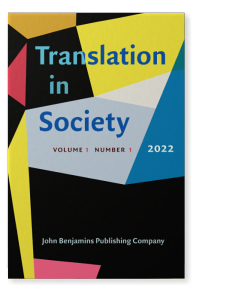
Special Issue of ‘Translation in Society’ 2:1

Guest editors:

The social world is not only a precondition for but itself a product of translation processes, as research into the role of translation in the construction of national or ethnic communities has shown (for example Brisset 1996; Cronin 1996; Venuti 1998; Kristmannsson 2005; Dizdar/Gipper/Schreiber 2015). However, translation – used here as an umbrella term for both translation and interpreting – plays an active part in the emergence of many more types of collectivities in various spheres of social life and on different levels of social organization: scientific communities (Stichweh 1984: 434), political movements (Tymoczko 2000; Baker 2013), religious gatherings (Hokkanen 2012), or multilingual dinner parties. How does translation contribute to the formation of these social entities? Are there identifiable general mechanisms and conditions at work? How does this contribution differ across social contexts, time, and space? And how can we conceptualize it?


This special issue invites contributions that focus on different forms and contexts in which translation enables and shapes the emergence of groups, movements and communities of any size, form and duration and/or plays a role in moving or dissolving borders between already established collectivities. Such a broad view also allows for the integration of questions which are of increasing academic and societal relevance: translation’s involvement in processes of bordering, inclusion and exclusion, participation, and other related issues. At the same time, this makes it possible to establish a basis for comparing different social configurations in terms of the impact of translation: for instance, how can the impact of translation on nation-building processes be compared to its role in the construction of scientific communities or political movements?


With a thematic focus at the intersection of sociology and translation studies, this special issue aims to contribute to a dialogue between the two disciplines. It invites papers with a focus on theory and methodology as well as empirical contributions. Suggested topics include, but are not limited to:

  • The role of translation in the emergence of collectivities (scientific communities, political or religious movements, etc.)
  • Translation and interpretation as a medium of societal participation and inclusion/exclusion (health services, political decision making, cultural events, etc.)
  • Symbolic functions of translation for collectivities (minorities, supra- and transnational communities, etc.)
  • Translation/interpreting as a practice of negotiating and marking linguistic and social belonging
  • Situativeness and temporality of translation-based construction of collectivities (translation and interpreting in emergency situations, at spontaneous gatherings, etc.)
  • Agents of translation-based collectivity construction (humans, machines, institutions, etc.)
  • Relevant intersections between translation theory and social theory; conceptual and methodological issues for studying collectivities as outcomes of translation processes.

References
Brisset, Annie (1996): A sociocritique of translation: theatre and alterity in Québec, 1968-1988. Toronto: UTP.
Cronin, Michael (1996): Translating Ireland: Translation, Languages, Cultures. Cork: CUP.
Venuti, Lawrence (1998): The Scandals of Translation: Towards an Ethics of Difference. London/New York: Routledge.
Kristmannsson Gauti (2005): Literary Diplomacy: The Role of Translation in the Construction of National Literatures in Britain and Germany 1750-1830. 2 vol. Frankfurt am Main (et al.): Peter Lang.
Dizdar, Dilek/Gipper, Andreas/Schreiber, Michael (2015): Nationenbildung und Übersetzung. Berlin: Frank & Timme.
Stichweh, Rudolf (1984): Zur Entstehung des modernen Systems wissenschaftlicher Disziplinen. Physik in Deutschland 1740-1890. Frankfurt am Main: Suhrkamp.
Baker, Mona (2013). “Translation as an Alternative Space for Political Action”, in: Social Movement Studies 12:1, 23–47.
Tymoczko, Maria (2000): “Translation and Political Engagement”, in: The Translator 6:1, 23–47.
Hokkanen, Sari (2012): “Simultaneous Church Interpreting as Service”, in: Gonzalez, Luís Pérez/Susam-Sarajeva, Şebnem (eds.): Special Issue: Non-professionals translating and interpreting. Participatory and engaged perspectives. The Translator 18:4, 291–309.


Timeline:
Deadline for abstracts (400-500 words): 30 June 2021
Notification on abstracts: 30 July 2021
Submission of full papers: 28 February 2022
Notification of outcome of peer review: 30 June 2022
Revised versions: 15 September 2022
Final decision: 15 October 2022
Final manuscripts: 15 November 2022
Publication: 1 February 2023

Please find more information about the journal ‘Translation in Society’ at https://www.benjamins.com/catalog/tris.

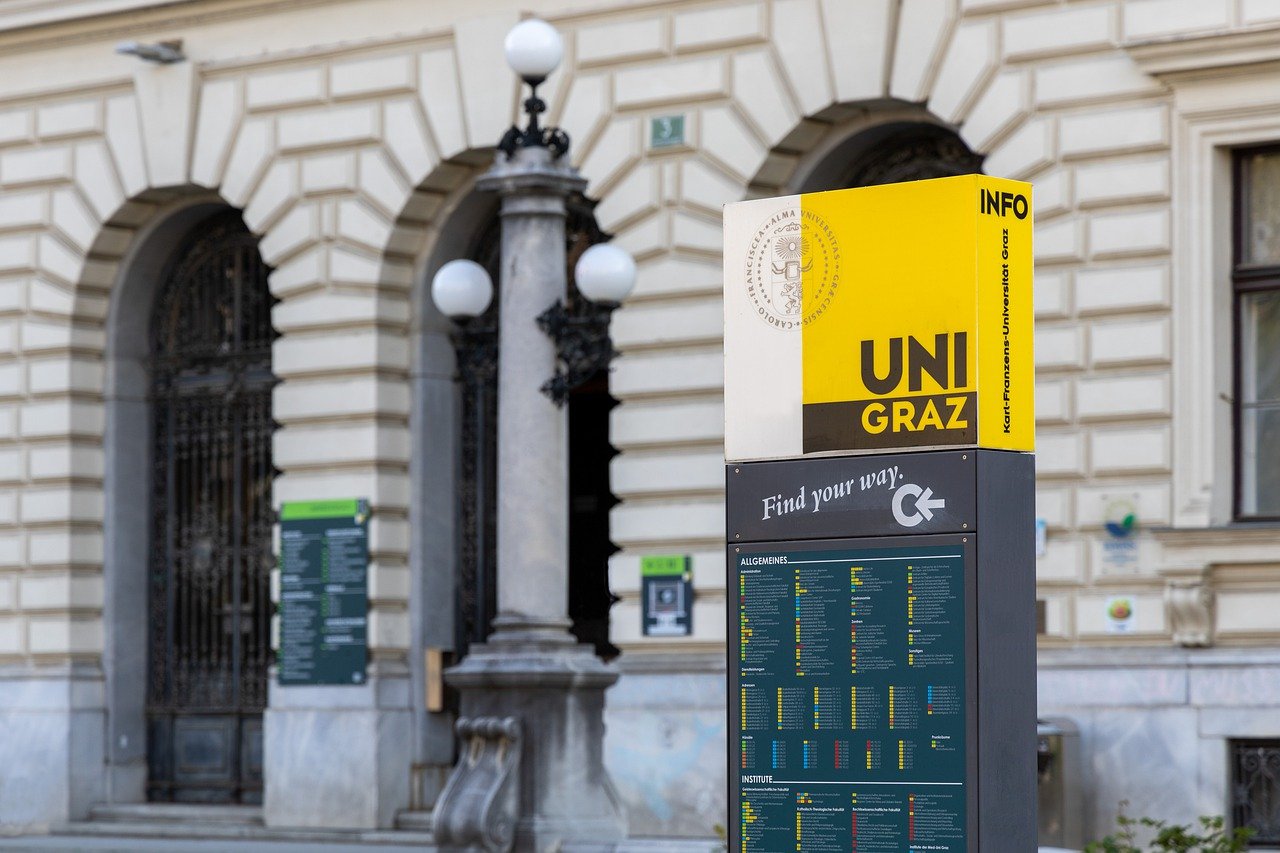
University Assistant with doctorate at the Institute of Translation Studies, University of Graz, Austria

0

At the University of Graz, researchers and students work across a broad disciplinary spectrum to enlarge our knowledge, and find strategies to deal with challenges our society is confronted with and to shape tomorrow’s world. The University of Graz is a place which combines high quality academic research and teaching, where achievement is rewarded, careers are promoted, and social diversity is encouraged – all within a modern, award-winning working environment. Our motto: We work for tomorrow. Join us!

The Institute of Translation Studies is looking for a University Assistant with doctorate (40 hours a week; fixed-term employment for the period of 6 years; position to be filled as of August 2nd 2021)

Duties and Responsibilities

  • Independent research and scientific collaboration in the research area „Translation, Migration, Minorities“
  • Possibility to write a postdoctoral theses (habilitation) within the research area “Translation, Migration, Minorities”
  • Assistance in the development of an interdisciplinary research collaboration within the D-A-CH area and with further European networks in the research area „Translation, Migration, Minorities“
  • Collaboration in the development of new methods of participatory translation research in migration contexts
  • Assistance to the establishment of interconnected interdisciplinary research and teaching
  • Assistance in the acquisition of external funding
  • Publications in scientific journals and/or other forms of knowledge transfer (dissemination of knowledge, e.g. via activities in society)
  • Participation in and co-organisation of workshops, symposia and conferences
  • Teaching
  • Student support
  • Administration related to research and teaching

Required profile

  • Doctorate in translation studies
  • Excellent knowledge of the theories and methods of translation studies
  • Previous work (e.g. as publications) on concepts and theories in translation studies
  • Previous work on theoretical and methodological questions in the areas of pedagogy, politics and/or ethics of translation
  • Experience in teaching translation studies courses und interest in the development of innovative teaching methods
  • International experience and (preferably international) publications
  • Experience in organizing academic events
  • Good knowledge of German and English and good knowledge of at least one other language taught at the institute
  • Taking pleasure in research, teaching and student support
  • Intercultural competence
  • Communication, organisational and above all teamwork skills
  • Commitment, personal initiative and proactive action
  • Reliability, resilience and flexibility

Our offer

Classification

Salary scheme of the Universitäten-KV (University Collective Agreement): B1

Minimum salary

The minimum salary as stated in the collective agreement and according to the classification scheme is EUR 3945.90 gross/month. This minimum salary may be higher due to previous employment periods eligible for inclusion and other earnings and remunerations.

We offer you a job with a lot of responsibility and variety. You can expect an enjoyable work climate, flexible work hours and numerous possibilities for further education and personal development. Take advantage of the chance to enter into a challenging work environment full of team spirit and enthusiasm for your job.

Application Deadline: June 23rd 2021
Reference Number: MB/117/99 ex 2020/21

The University of Graz strives to increase the proportion of women in particular in management and faculty positions and therefore encourages qualified women to apply.

Especially with regard to academic staff, we welcome applications from persons with disabilities who meet the requirements of the advertised position.

If you are interested, please submit your application documents including a concept for a habilitation project with a clear reference to the research focus Translation, Migration and Minorities (2-3 pages), letter of motivation, academic curriculum vitae and copies of your university degree certificates before the stated deadline. Make sure to indicate the reference number on your application to: bewerbung@uni-graz.at

Further information on the research focus can be found at: https://homepage.uni-graz.at/de/sebnem.bahadir-berzig/ For further questions, please contact Prof. Dr Şebnem Bahadır: sebnem.bahadir-berzig@uni-graz.at

Cfp: The Conceptualisation of Translation in Translation Studies: Past, Present and Future

0
Translation Studies Special Issue

Translation Studies

Special Issue Editor(s)

Sergey TyulenevDurham University
sergey.tyulenev@durham.ac.uk

Binghan ZhengDurham University
binghan.zheng@durham.ac.uk

Kobus MaraisUniversity of the Free State
jmarais@ufs.ac.za

So far, the predominant tendency in Translation Studies (TS) has been to prioritise, implicitly or explicitly, (inter)lingual types of translation and interpreting. Having said that, there have also been various attempts to go beyond such a narrow conceptualisation. Why is there an urge to do this? To what past or present tendencies in theorizing translation can it be traced? Is this a welcome development in the discipline? If so, where might it lead us? These the some of the questions that this special issue seeks to address.

Traditionally, the development of TS has been viewed as a succession of turns (Snell-Hornby 2006). Yet the concept of a turn in TS is questionable in at least two respects. First, it suggests that the entire scholarly community in TS changes the direction of their research – yet, if we stick to this spatial imagery, research into translation appears increasingly less like a valley carved by a single river that takes various turns it flows but rather like a delta, a complex network of interconnected streams, leading to a vast ocean somewhere ahead. Secondly – and this aspect is especially important for the theme of this special issue – whatever turns there have been in TS, they have not changed the main optics on translational phenomena. The transfixing gaze has always been on lingual manifestations of translation, primarily interlingual, “translation proper”. Yet, how epistemologically justified is this dominant focus? Can we learn more about the phenomenon of translation if we take into account its non-lingual types? Would that shift in focus (from lingual translation to translation per se) result in the need to redraw the boundary of TS as a discipline, and its relationship with other disciplines dealing with various kinds of translation?

The aim of this special issue is to address these crucial, discipline-defining but also inter- or trans-disciplinary questions. The conceptualisation of translation will be explored along various axes: synchronically (analysing the situation in present-day TS and exploring the inchoate “turns”) and diachronically (looking back at historical conceptualisations of translation as well as inviting informed predictions about the ocean to which the richness of the discipline and its bold inroads into adjacent terrains are leading us).

Abstracts are invited for articles that delve into the conceptualisation of translation in TS. Potential topics include, but are not restricted to, the following:

> How can practices that might be described as translational but not belonging to the lingual types of translation (or at least not only to them) be theorised? An example of such translational, non-lingual practice is found in the actor-network theory (ANT, Latour 1987), where one agent recruits other agents into a social project. The sociologists who developed ANT saw the social activity of such recruiting as best describable as “translation” and the entire theory is subtitled as “a sociology of translation” (une sociologie de la traduction). The sociological theory of translational relations (Übersetzungsverhältnisse) elaborated in Renn (2006) is another example of translational practices in society: each social act is different from any other but social agents translate their knowledge about other similar acts onto their interpretation of the case at hand. In anthropology, we find the idea of cultural translation which also goes beyond the lingual dimension (Bachmann-Medick 2006) and centres on encounter (Blumczynski 2016). Contributions are welcome to discuss such practices and the rationale of their being theorizable as translational in any point of space or time.

> What new do we learn about translation by observing it when it mediates between different semiotic systems (Petrilli 2003; Marais 2019)? For instance, how do filmic adaptations of written texts or scripts enrich or problematise our understanding of the translator’s profile? How does the problem of (in)visibility of interlingual translation play out in filmic or musical types of translation? When a composer translates a bird’s song into his or her score, s/he performs translation without understanding the meaning of the “source text”; how does translation between nature and music enrich our understanding of translation as a semantically focussed practice?

> How are technological advances over the next 50 years, for instance in artificial intelligence and intelligent communication devices, likely to challenge our conceptualisation of both translation and translator (Chesterman 2009; Kaindl 2021)? Linked to this question, how may developments in cognitive and neurological research over the next 50 years challenge our conceptualisation of both translation and translator? Consider here, among other phenomena, hybrid forms of intelligence in which the natural human intelligence is enhanced through technology (for example, a pair of glasses linked to a computer that allows one to live in a reality that is both virtual and real).

> Is some consensus possible on the broadest terms in which to conceptualise translation, both in TS and beyond? What value, if any, would such a broad conceptualisation add to TS? What would be the future of TS if it keeps its ambit limited to interlingual translation? To what extent are the concerns about blurring the disciplinary boundaries of TS through interdisciplinarity and transcisciplinarity justifiable? Are there dangers in blurring these boundaries, and what consequences might there be for the academic status of TS?

Submission Instructions

Articles will be 5,000–8,000 words in length, in English (including notes and references).

Detailed style guidelines are available below.

Abstracts of 700–800 words (excluding references) should be sent to the guest editors at sergey.tyulenev@durham.ac.ukbinghan.zheng@durham.ac.uk and jmarais@ufs.ac.za ‎by 15 October 2021.

Schedule

15 December 2021: decisions on proposals
15 July 2022: submission of papers for peer review
31 December 2022: submission of completed articles
May 2023: publication date

For more information and submission visit the official website