


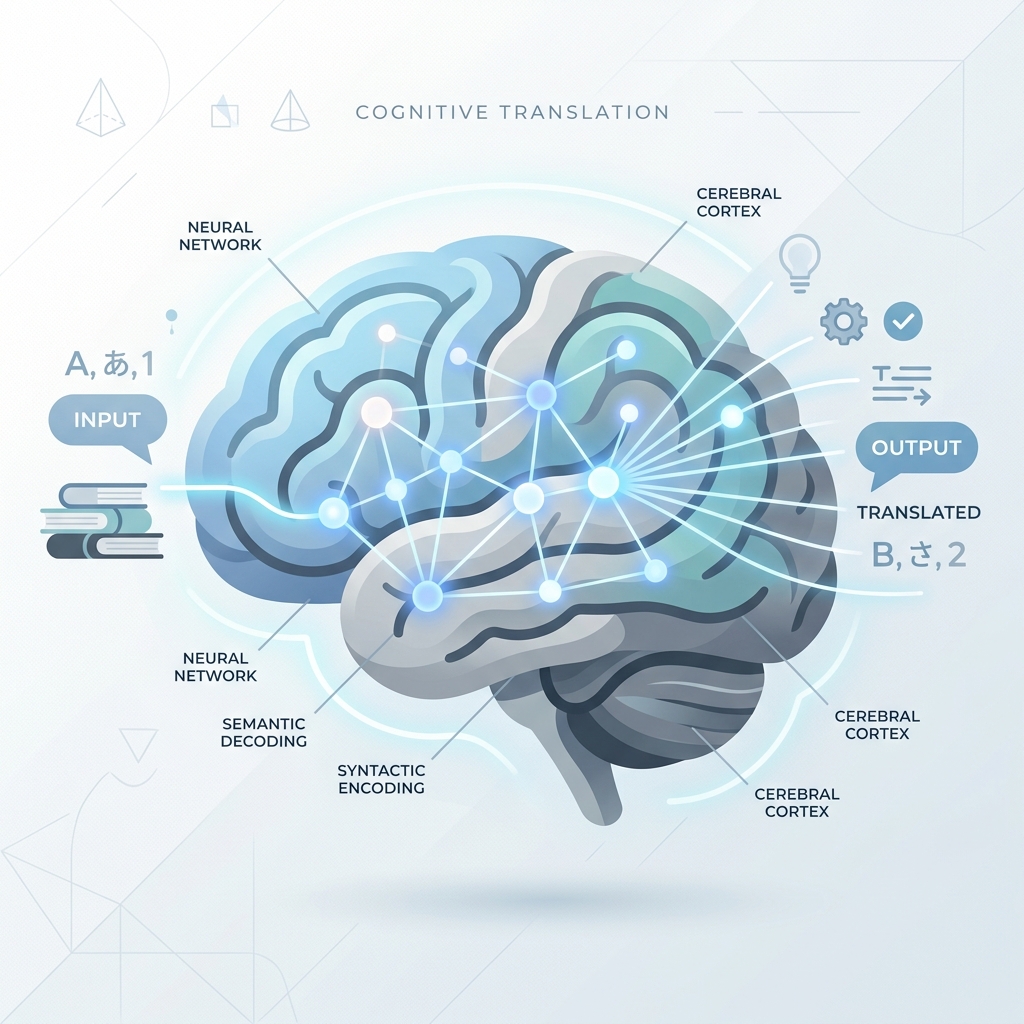
As Neural Machine Translation (NMT) achieves unprecedented levels of fluency, the ontological definition of the ‘translator’ is undergoing a radical shift. Early translation theories, such as Eugene Nida’s functional equivalence, assumed human cognition was the sole engine of linguistic transfer.
The Post-Human Turn
Contemporary scholars argue we have entered the ‘post-human’ era of translation (Cronin, 2013). The translator is no longer a solitary reader-writer, but a cyborgian agent integrated with algorithmic systems. Cognitive Translation Studies (CTS) now focuses heavily on the ergonomics of post-editing environments and the cognitive friction caused by correcting machine output.
Conclusion
Rather than rendering the translator obsolete, NMT elevates the linguist to an editor and cultural mediator, responsible for the ethical and sociolinguistic nuances that algorithms cannot parse.